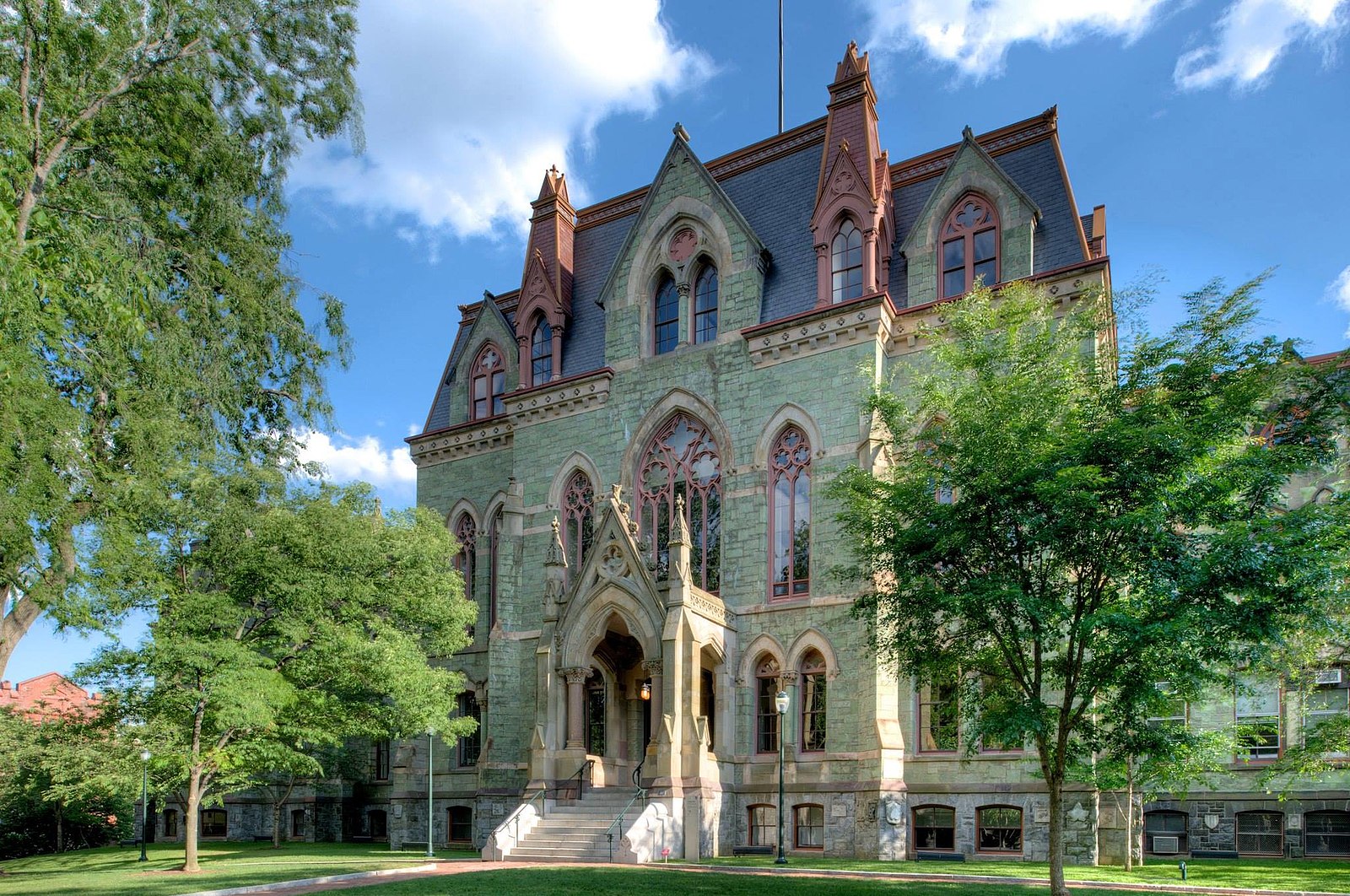
Open Expression at Penn: We need shared governance and a commitment to free speech
Note: Use this form to add your name to the list at the end of this post.
On March 31, 2026, the Provost’s Office released a draft of the Open Expressions Guidelines via the Penn Almanac. As we noted in our statement two weeks ago, the process behind replacing the Temporary Guidelines has been opaque and diverged from historical precedent at Penn. In terms of protecting free speech and academic freedom, the new guidelines are problematic: They are expanded to encompass online expression of Penn community members; increase the likelihood of disciplinary action for violating the standards; make additional demands on producing identification during events; and introduce a new Executive Director of Open Expression, who is appointed by and reports to the Provost.
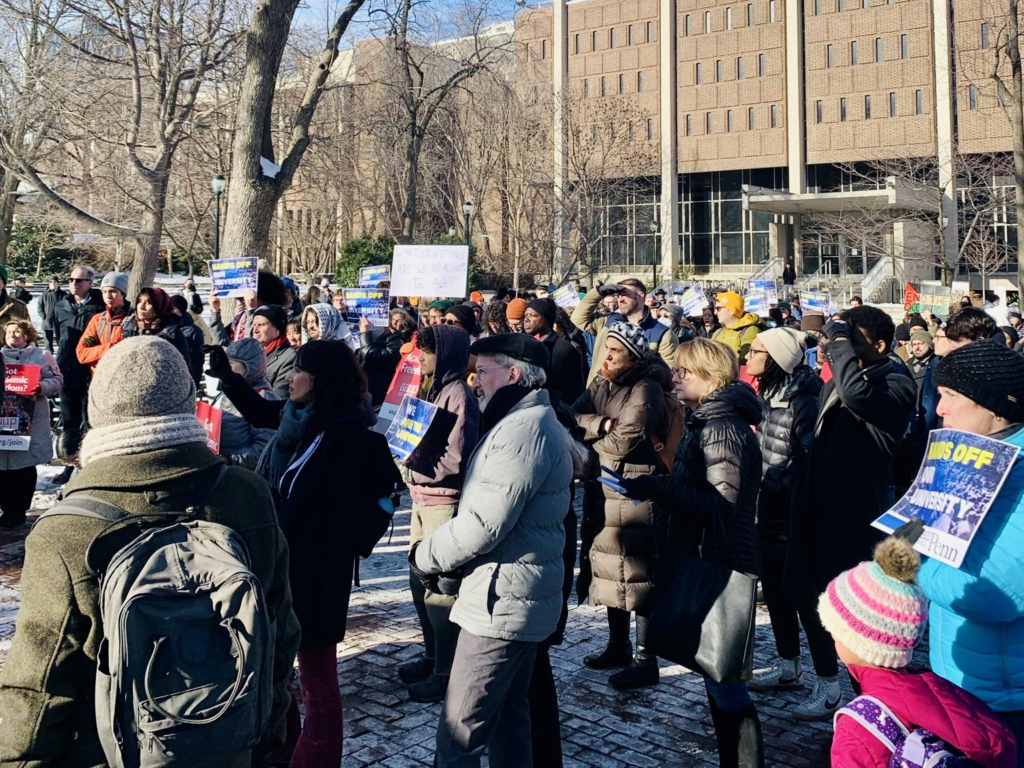
AAUP-Penn is committed to shared governance and academic freedom, and the proposed guidelines undermine both. They further concentrate power in the Provost’s Office, eroding the ability of faculty, students and staff across campus to engage in debate about difficult topics – something that’s crucial to intellectual life. Now is the time to let the Provost’s Office know that true open expression is central to Penn’s community, and any process shaping it has to include both meaningful contributions from across campus and a commitment to protecting the right to peaceful protest.
We invite all members of the Penn community – students, staff, faculty and alums – to urge the Provost’s Office to commit to (1) shared decision making and procedural transparency and (2) robust protection of free speech.
AAUP-Penn invites members of the Penn community to publicly affirm the following statement: “I object to the process and contents of these proposed guidelines and urge the Provost to commit both to greater protection of free speech and to follow long-established, shared decision-making procedures for university policy changes.” A list of signatories will be added to this page shortly and updated daily. Use this reply form to add your name. In addition, faculty, staff, and students in the Penn community are invited to commit to take specific actions to defend shared governance and free speech on campus:
- Attend an AAUP-Penn meetup at 3:00 pm on Thursday, April 23, 2026, immediately before the scheduled In-Person Listening Session (sign up for updates via our reply form as well).
- Attend the In-Person Listening Session at 4:00 p.m. on Thursday, April 23, 2026, at Perry World House.
- Attend the Virtual Listening Session at 12:00 noon on Friday, April 24, 2026.
[Update: April 30th, 3:00pm] The undersigned members of the Penn community affirm the statement: “I object to the process and contents of these proposed guidelines and urge the Provost to commit both to greater protection of free speech and to follow long-established, shared decision-making procedures for university policy changes.”
- Jessa Lingel (Faculty, Annenberg School for Communication)
- Akira Drake Rodriguez (Faculty, Stuart Weitzman School of Design)
- Lorena Grundy (Faculty, School of Engineering and Applied Sciences)
- Chi-ming Yang (Faculty, School of Arts and Sciences)
- Andrew Lamas (Faculty, School of Arts and Sciences, School of Social Policy and Practice)
- Jen McLaughlin Cahill (Faculty, Graduate School of Education)
- So-Rim Lee (Faculty, School of Arts and Sciences)
- Jessica Whitelaw (Faculty, Graduate School of Education)
- Suvir Kaul (Faculty, School of Arts and Sciences)
- Victor Pickard (Faculty, Annenberg School for Communication)
- Carolyn Marvin (Faculty, Annenberg School for Communication)
- Robert Vitalis (Faculty, School of Arts and Sciences)
- Philip Gressman (Faculty, School of Arts and Sciences)
- Karen Redrobe (Faculty, School of Arts and Sciences)
- Kate Rojas (Staff, Penn Libraries)
- Ryan Fair (Research Associate/Postdoc, Perelman School of Medicine)
- Alexander Berry (Graduate Student, Penn Carey Law)
- Ben Webster (Staff, Penn Libraries)
- John Wolfe (Faculty, Perelman School of Medicine, School of Veterinary Medicine)
- Clara Abbott (Graduate Student, Graduate School of Education)
- Sam Schirvar (Graduate Student, School of Arts and Sciences)
- Julia Alekseyeva (Faculty, School of Arts and Sciences)
- Carl DeBaun (Staff, Perelman School of Medicine)
- LauraEllen Ashcraft (Faculty, Perelman School of Medicine)
- Caz Batten (Faculty, School of Arts and Sciences)
- Bruce Simon (Associate Professor of English at SUNY Fredonia and President of the SUNY University Faculty Senate)
- Riley Shahar (Graduate Student, School of Arts and Sciences)
- Katherine Knox (Graduate Student, Stuart Weitzman School of Design)
- Cara Bishop (Staff, School of Arts and Sciences)
- Kerry Nix (Graduate Student, Perelman School of Medicine)
- Sam Franz (Graduate Student, School of Arts and Sciences)
- Janice Bellace (Faculty, Wharton School)
- Jonathan Nadraws (Research Associate/Postdoc, Perelman School of Medicine)
- Sarah True (Staff, Perelman School of Medicine)
- David Kazanjian (Faculty, School of Arts and Sciences)
- Robin Pemantle (Faculty, School of Arts and Sciences)
- Randall Burson (Graduate Student, Perelman School of Medicine)
- Maya English (Graduate Student, Perelman School of Medicine)
- Michael Marks (Faculty, Perelman School of Medicine)
- Rachel Silverstein (Graduate Student, Graduate School of Education)
- Maxine Calle (Graduate Student, School of Arts and Sciences)
- Rafael Khachaturian (Faculty, School of Arts and Sciences)
- Miles Black (Alumni, Perelman School of Medicine, Hospital of the University of Pennsylvania)
- Nicolai Apenes (Graduate Student, Perelman School of Medicine)
- Mathias Wegner (Staff, Information Systems and Computing)
- Xavier Xin (Graduate Student, School of Arts and Sciences)
- Rylee Smith (Graduate Student, School of Arts and Sciences)
- Nora Bradford (Faculty, School of Arts and Sciences)
- Kathryn Chen (Alumni, School of Engineering and Applied Sciences)
- Asia Kopcsandy (Staff, School of Veterinary Medicine)
- Amy Offner (Faculty, School of Arts and Sciences)
- Austin Miles (Graduate Student, School of Arts and Sciences)
- Ethan Blackwood (Graduate Student, Perelman School of Medicine)
- Justin Mullikin (Faculty, School of Arts and Sciences)
- Daniel Angelis-Kaisla (Staff, Stuart Weitzman School of Design)
- Gerald Campano (Faculty, Graduate School of Education)
- Violet Ullman (Graduate Student, School of Engineering and Applied Sciences)
- Richard M Leventhal (Faculty, School of Arts and Sciences)
- Stephanie Feldman (Faculty, School of Arts and Sciences)
- Emma Glenister (Graduate Student, School of Arts and Sciences)
- Elena Sisti (Center for Bioethics)
- Peter Holquist (Faculty, School of Arts and Sciences)
- Jenavive Banes (Graduate Student, School of Social Policy and Practice)
- Isabel Navarro (Graduate Student, School of Engineering and Applied Sciences)
- Bakirathi Mani (Faculty, School of Arts and Sciences)
- Carolina García (Perelman School of Medicine)
- Ameena Ghaffar-Kucher (Faculty, Graduate School of Education)
- Samuel Martin (Faculty, School of Arts and Sciences)
- Huda Fakhreddine (Faculty, School of Arts and Sciences)
- Rami George (Faculty, Stuart Weitzman School of Design)
- Selma Feliciano Arroyo (Faculty, School of Arts and Sciences)
- Andrea Liu (Faculty, School of Arts and Sciences)
- PAMELA FELDER-SMALL (Alumni, Graduate School of Education)
- Michelle Taransky (Faculty, School of Arts and Sciences)
- Anne Berg (Faculty, School of Arts and Sciences)
- David Lydon-Staley (Faculty, Annenberg School for Communication)
- Marcy Norton (Faculty, School of Arts and Sciences)
- Marc Muhleisen (Graduate Student, School of Arts and Sciences)
- Fabian Arzuaga (Faculty, School of Arts and Sciences)
- Ian Lustick (Faculty, School of Arts and Sciences)
- Ann Farnsworth-Alvear (Faculty, School of Arts and Sciences)
- Tim Holliday (Faculty, School of Arts and Sciences)
- Henry Towsner (Faculty, School of Arts and Sciences)
- Emily Perkins (Research Associate/Postdoc, Perelman School of Medicine, School of Arts and Sciences)
- Jami Fisher (Faculty, School of Arts and Sciences)
- Kirsten Lydic (Graduate Student, Annenberg School for Communication)
- Matthew Conaty (Graduate Student, Annenberg School for Communication)
- Emilie Grybos (Graduate Student, Annenberg School for Communication)
- Julian Quiros (Research Associate/Postdoc, Annenberg School for Communication)
- Yphtach Lelkes (Faculty, Annenberg School for Communication)
- Shawn Kornhauser (Staff, Annenberg School for Communication)
- Eszter Zimanyi (Staff, Annenberg School for Communication)
- Lucy March (Research Associate/Postdoc, Annenberg School for Communication)
- Kelly Fernandez (Staff, Annenberg School for Communication)
- Phillip Fackler (Faculty, School of Arts and Sciences)
- Sima Kokotovic (Research Associate/Postdoc, Annenberg School for Communication)
- Christine Phan (Graduate Student, Annenberg School for Communication)
- Emily Falk (Faculty, Annenberg School for Communication)
- Jenny Lee (Graduate Student, Annenberg School for Communication)
- Sarah Jackson (Faculty, Annenberg School for Communication)
- Donovan Schaefer (Faculty, School of Arts and Sciences)
- Siarhei Biareishyk (Faculty, School of Arts and Sciences)
- Huay Din (Graduate Student, School of Engineering and Applied Sciences)
- Georgia McClain (Graduate Student, Perelman School of Medicine)
- Ben Mathews (Graduate Student, School of Arts and Sciences)
- Marlene Probst (Graduate Student, Perelman School of Medicine)
- Kate Okker-Edging (Graduate Student, Annenberg School for Communication)
- Rupa Pillai (Faculty, School of Arts and Sciences)
- Ed Brockenbrough (Faculty, Graduate School of Education)
- Joseph Lowry (Faculty, School of Arts and Sciences)
- Margaret Kandel (Research Associate/Postdoc, School of Arts and Sciences)
- Zachary Matthew (Staff, Annenberg School for Communication)
- Kevin M. F. Platt (Faculty, School of Arts and Sciences)
- Diana Mutz (Faculty, Annenberg School for Communication)
- David Park (Alumni, Annenberg School for Communication)
- Emily Steinlight (Faculty, School of Arts and Sciences)
- Sam Layding (Graduate Student, School of Engineering and Applied Sciences)
- Danaé Metaxa (Faculty, School of Engineering and Applied Sciences)
- Aaron Shapiro (Alumni, Annenberg School for Communication, School of Arts and Sciences)
- Pratyush Mishra (Faculty, School of Engineering and Applied Sciences)
- Sun-ha Hong (Alumni, Annenberg School for Communication)
- Michael Sullivan (Staff, School of Arts and Sciences)
- Allison Schmidt (Faculty, School of Arts and Sciences)
- Carlos Pio (Faculty, School of Arts and Sciences)
- Mary Summers (School of Arts and Sciences)
- Fariha Khan (Staff, School of Arts and Sciences)
- Travis McGaha (Faculty, School of Engineering and Applied Sciences)
- Rodrigo Jara (Student – Undergradaute, School of Arts and Sciences)
- Lidia Leon-Blazquez (Faculty, School of Arts and Sciences)
- Ally Paul (Staff, Annenberg School for Communication)
- Olga Guadalupe (Faculty, School of Arts and Sciences)
- Evan Wilkerson (Staff, Annenberg School for Communication)
- Jorge Tellez (Faculty, School of Arts and Sciences)
- Ania Loomba (School of Arts and Sciences)
- Liz Hallgren (Graduate Student, Annenberg School for Communication)
- Marie Gottschalk (Faculty, School of Arts and Sciences)
- Geordan Stukey (Research Associate/Postdoc, Perelman School of Medicine)
- Jane Esberg (Faculty, School of Arts and Sciences)
- Amy Hillier (Faculty, School of Social Policy and Practice)
- Nancy Hirschmann (Faculty, School of Arts and Sciences)
- Anne Norton (Faculty, School of Arts and Sciences)
- Tariq Thachil (Faculty, School of Arts and Sciences)
- Teresa Gimenez (Faculty, School of Arts and Sciences)
- George Porter (Graduate Student, Penn Carey Law)
- Margaret Balich (Graduate Student, Stuart Weitzman School of Design)
- Justin Roncaioli (Research Associate/Postdoc, School of Veterinary Medicine)
- Andy Tan (Faculty, Annenberg School for Communication)
- Tyson Smith (Faculty, School of Arts and Sciences)
- Tulia Falleti (Faculty, School of Arts and Sciences)
- Ericka Beckman (Faculty, School of Arts and Sciences)
- Hailey Reissman (Staff, Annenberg School for Communication)
- Mitch Fraas (Staff, Penn Libraries)
- Nina Sparling (Graduate Student, School of Arts and Sciences)
- Nikhil Dharan (Alumni, School of Arts and Sciences)
- brendan mahoney (Alumni, Annenberg School for Communication)
- Sebastián Gil Riaño (Faculty, School of Arts and Sciences)
- Flannery Jamison (Graduate Student, School of Arts and Sciences)
- Emma Fischer (Graduate Student, Perelman School of Medicine)
- Lex Von Klark (Graduate Student, School of Arts and Sciences)
- Roger Burtonpatel (Graduate Student, School of Engineering and Applied Sciences)
- Giana Vitale (Graduate Student, School of Engineering and Applied Sciences)
- Yara Haidar (Graduate Student, Penn Carey Law)
- Finn Dierks-Brown (Graduate Student, School of Arts and Sciences)
- Martin Rybertt (Graduate Student, School of Engineering and Applied Sciences)
- Clancy Murray (Graduate Student, School of Arts and Sciences)
- Delaney Wilde (Graduate Student, School of Engineering and Applied Sciences)
- Elise Parrish (Graduate Student, School of Arts and Sciences)
- Alexis Scott (Graduate Student, Perelman School of Medicine)
- Paul Saint-Amour (Faculty, School of Arts and Sciences)
- Oscar Montoya (Faculty, School of Arts and Sciences)
- Luke Krier (Student – Undergradaute, School of Arts and Sciences)
- Lily Weeks (Graduate Student, School of Arts and Sciences)
- Juliana Byers (Graduate Student, School of Nursing)
- Wendy Su (Graduate Student, Perelman School of Medicine)
- Emmy Talian (Graduate Student, Graduate School of Education)
- Keegan Krick (Graduate Student, Perelman School of Medicine)
- Sharon Chan (Graduate Student, Graduate School of Education)
- Jordan Williams (Graduate Student, Perelman School of Medicine)
- Roquinaldo Ferreira (Faculty, School of Arts and Sciences)
- Dagmawi Woubshet (Faculty, School of Arts and Sciences)
- Ezra Lebovitz (Graduate Student, School of Arts and Sciences)
- Brent Cebul (Faculty, School of Arts and Sciences)
- Kay Labella (Graduate Student, Perelman School of Medicine)
- Cheikh Babou (Faculty, School of Arts and Sciences)
- Austin McCredie (Graduate Student, School of Arts and Sciences)
- Catherine Bartch (Staff, School of Arts and Sciences)
- Chelsea Cohen (Graduate Student, School of Arts and Sciences)
- Joshua Claxton (Graduate Student, Stuart Weitzman School of Design)
- John Deschaine (Graduate Student, Perelman School of Medicine)
- Billy Pierce (Graduate Student, Annenberg School for Communication)